


When you check live match scores online—whether on a site like www.fifadata.com/kqbd/ or through an app—you’ll often see a series of abbreviations next to the scoreline. For new fans or casual viewers, these acronyms like FT, HT, ET, and PEN can be confusing at first glance. Understanding what they mean helps you interpret results correctly and follow matches more intelligently.
In this article, we break down these common result indicators, explain when they appear, and shed light on how they relate to the flow of a football match. Whether you are tracking scores for fun, analysis, or fantasy football, knowing these terms makes following games much easier.
HT – Half Time
The abbreviation HT stands for half-time, which is the break between the two 45-minute halves of a football match. After the first 45 minutes of play (plus any added stoppage time), the referee blows the whistle to signal half-time, and the current score up to that point is recorded as the half-time result.
Half-time is more than just a break for players; it’s a reference point for analysts, coaches, and fans. Many strategies, substitutions, and tactical changes are discussed during this interval. In some betting markets, the half-time result (often noted as HT) can be a specific betting category, combining predictions for both the first half and full time.

The “HT” marker shows the match score at the end of the first half in a live score display
FT – Full Time
The term FT stands for full time and appears when the match has officially concluded. This includes the standard 90 minutes of play plus any stoppage time added by the referee. Once the final whistle is blown, the score is frozen and the match result is recorded as the full-time result.
You’ll see FT listed next to the score when browsing results or in tables summarizing match outcomes. This score is considered the final result for the purposes of league standings, points allocation, and historical records.
ET – Extra Time
In many knockout competitions or cup ties, a match cannot end in a draw. When the score is tied at full time and a winner must be decided, the game may go into extra time, which is typically two 15-minute halves played immediately after the regular 90 minutes.
During this period, the match status may be shown as ET, meaning that the game is currently in extra time. If a score changes during ET, that update will appear in the live result timeline. After extra time ends, if there is still no winner, the match may proceed to penalties to decide a victor. Note that the final score after extra time still may be shown as ET if the full-time result includes goals scored during these additional periods.
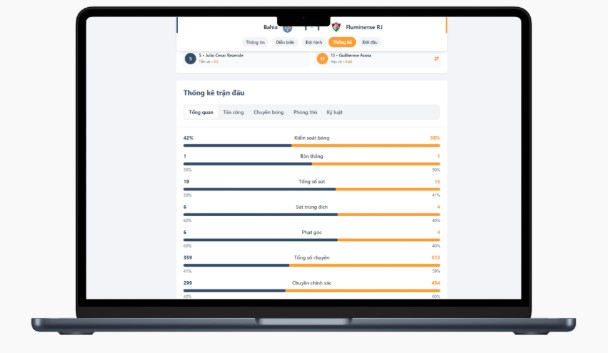
Extra time periods are used in knockout matches to decide a winner when the score is tied after 90 minutes.
PEN – Penalty Shootout
PEN stands for penalty shootout, a tie-breaking method used in competitions that require a winner rather than a draw. After extra time ends with teams still level, players take alternating shots from the penalty mark to determine the winner.
When a match goes to penalties, live score displays will often show the shootout result separately from the match score during regulation and extra time. Penalty shootouts are commonly used in tournaments such as cup competitions or phases where progression depends on a single winner.
Unlike regular goals scored during play, penalties in a shootout do not typically count toward player goal tallies or official match statistics—they are simply a mechanism to settle the contest.
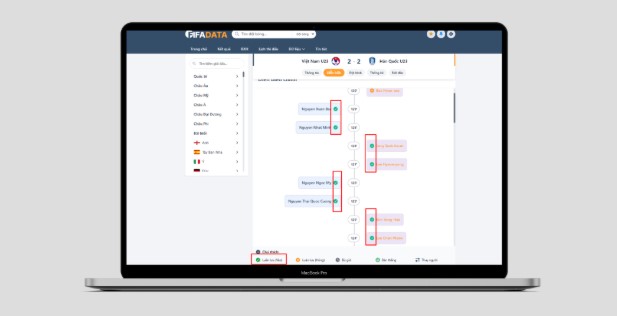
The “PEN” label indicates the winner was decided by a penalty shootout after extra time ended level.
How These Terms Appear in Live Score Interfaces
When you check live or completed match results, especially on detailed sites like FIFADATA, these abbreviations help you understand the state of the game instantly. A live indicator might show “LIVE,” meaning the match is currently in progress, while “HT,” “FT,” or “ET” indicate various stages of completion.
Knowing that FT indicates the end of play, while HT shows the midpoint, gives you immediate clarity on the match’s progress. Seeing ET means you’re watching an extended game, and PEN tells you that the result has been decided via spot kicks rather than normal or extra time.
Why These Abbreviations Matter for Fans
Whether you’re following matches casually or using this information for analysis or betting, these abbreviations matter because they convey context:
- HT helps you gauge mid-match momentum.
- FT tells you the match is over and points have been finalized.
- ET and PEN show that a knockout situation was involved.
Understanding these markers also makes it easier to read commentary, match reports, or database summaries where full textual descriptions are impractical.
Common Misunderstandings
It’s important not to confuse stoppage time (added to account for interruptions during a half) with extra time. Stoppage time is included in the regular 90 minutes and does not change the status from HT to FT prematurely. Extra time is a separate period only used in certain match formats.
Additionally, penalty shootout goals are not usually included in match scorelines as part of a player’s individual goal count, even though they determine which team advances or wins.
Extra Notation in Extended Results
While FT, HT, ET, and PEN are the most common abbreviations related to match status, some platforms also use other indicators such as “AET” (After Extra Time), which specifically highlights a final result after the extra time period has been completed.
More detailed live score interfaces may separate these stages even further to help fans and analysts interpret events accurately.
Final Thoughts
Understanding what FT, HT, ET, and PEN mean is foundational for reading football results correctly. These abbreviations condense key match information into short markers that help fans follow games at a glance. Whether you are browsing today’s fixtures or reviewing past matches, knowing these terms deepens your comprehension of how results are reported and interpreted.
As live score platforms continue to evolve, these terms remain consistent because they reflect the structure and rules of the sport itself—making them essential vocabulary for every football fan.
